Introduction
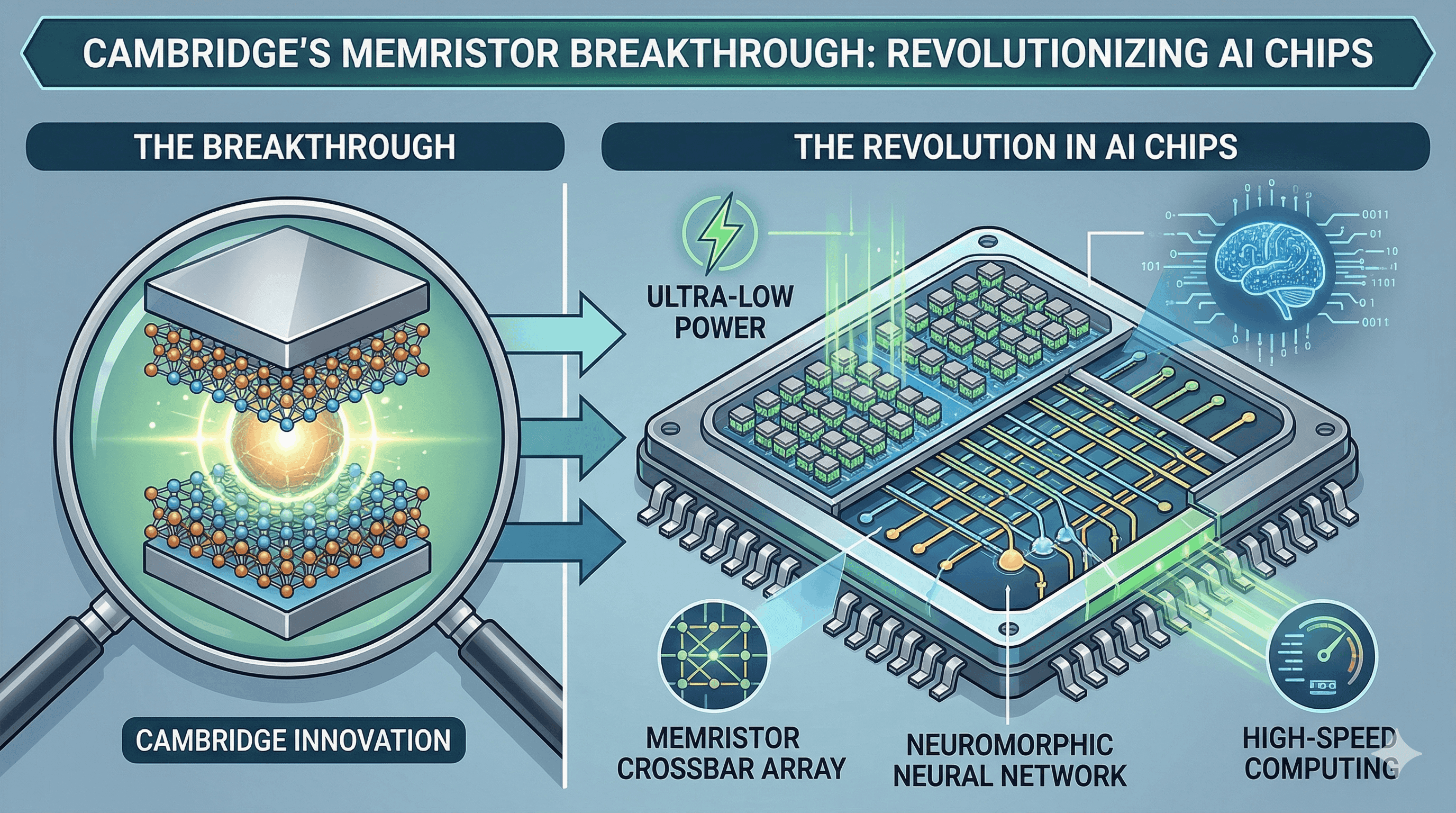
Artificial intelligence (AI) is shaping industries faster than we can imagine. One of the most pressing issues facing AI development is its significant energy consumption. Recent advancements from a team at the University of Cambridge have introduced a new type of hafnium oxide memristor, which promises to revolutionize AI chips and drastically reduce energy usage. Operating at lower switching currents than traditional technology, this breakthrough not only enhances performance but also aligns with global sustainability goals.
Who Should Use This
Understanding these breakthroughs can benefit various stakeholders:
- Tech Developers: Those who design and develop AI applications can integrate the new memristor technology to create more energy-efficient products.
- Data Center Operators: With escalating energy costs, data centers seeking to minimize expenses can adopt this technology to lower their power consumption dramatically.
- AI Researchers: Academics and researchers focusing on neuromorphic computing will find this exploration of memristor technology instrumental in their studies.
- Investors: Stakeholders in the tech industry can identify lucrative opportunities by backing start-ups that leverage these advancements.
The Memristor Advantage
Memristors represent a paradigm shift in how data is processed and stored. Unlike conventional chips that separate memory and processing, memristors integrate these functions, minimizing energy-intensive data transfers between different components. The recent Cambridge advancement enhances this capability, focusing on stability and energy efficiency—key factors in pushing AI technologies forward.
Key Features
- Ultra-Low Switching Currents: Cambridge’s hafnium oxide memristors can operate at currents below 10 nanoamps, making them a million times more efficient than traditional devices.
- Enhanced Conductance Levels: By producing hundreds of distinct conductance levels, these memristors can greatly improve computational accuracy and efficiency.
- Durability and Longevity: These devices demonstrate over 50,000 pulse-switching cycles and are capable of remarkable retention times exceeding 105 seconds, setting them up for long-term usage across various applications.
Practical Use Cases
1. Educational Insights
Students in engineering disciplines can leverage this technology as a case study, fostering interest and sparking innovation in AI hardware and software design. Understanding the implications of energy-efficient computing could provide graduates with a competitive edge.
2. Enhancing Business Productivity
Companies that aim to bolster efficiency will find integrating memristors pivotal. With lower operational costs associated with energy consumption, businesses benefit both financially and environmentally, fulfilling increasing corporate social responsibility standards.
3. Transforming Daily Life
AI solutions powered by memristors can enhance everyday applications, from smart home devices to personal assistants, allowing consumers to access technology that is not only feature-rich but also energy-efficient. Improved AI functionalities can lead to cost-effective solutions for everyday users concerned about energy usage.
Comparison of Memristor Technologies
Below is a comparative analysis of traditional memristor technologies versus the new hafnium oxide memristor developed at Cambridge:
| Feature | Traditional Memristors | New Hafnium Oxide Memristors |
|---|---|---|
| Switching Current | Higher than 10 nanoamps | Below 10 nanoamps |
| Energy Consumption | High | Significantly lower |
| Device Stability | Limited | Exceptional uniformity |
| Retention Time | < 105 seconds | > 105 seconds |
| Endurance | < 50,000 cycles | > 50,000 cycles |
Actionable Checklist
To leverage this technology effectively, consider following this checklist:
- Evaluate Current Hardware: Assess existing AI hardware and identify areas where memristor integration can improve energy efficiency.
- Research Applications: Stay informed about potential applications of memristor technology in your tech developments.
- Explore Partnerships: Network with suppliers or startups innovating in memristor technology to stay ahead of trends.
- Continuous Learning: Keep yourself updated about advancements in the AI field, especially as they pertain to energy-efficient technologies.
- Cost Analysis: Conduct a cost-benefit analysis to determine how switching to memristor technology can impact energy bills and operational costs.
Conclusion
The recent breakthrough from Cambridge researchers offers not just a vision for a more sustainable AI landscape but also tangible steps that can be taken today. As global attention turns to energy consumption, integrating memristors into tech strategies could be pivotal for businesses aiming to maintain a competitive edge while reducing their environmental impact. The future of AI computing is not only smarter but also greener.
For more detailed insights, visit Tom's Hardware.


