Introduction
As we progress through 2026, the competition in artificial intelligence (AI) between China and the United States has intensified, profoundly shaping the geopolitical landscape as well as the tech industry. This article delves into the contrasting strategies, innovations, and policies that define each country’s approach to AI development and deployment.
What Changed?
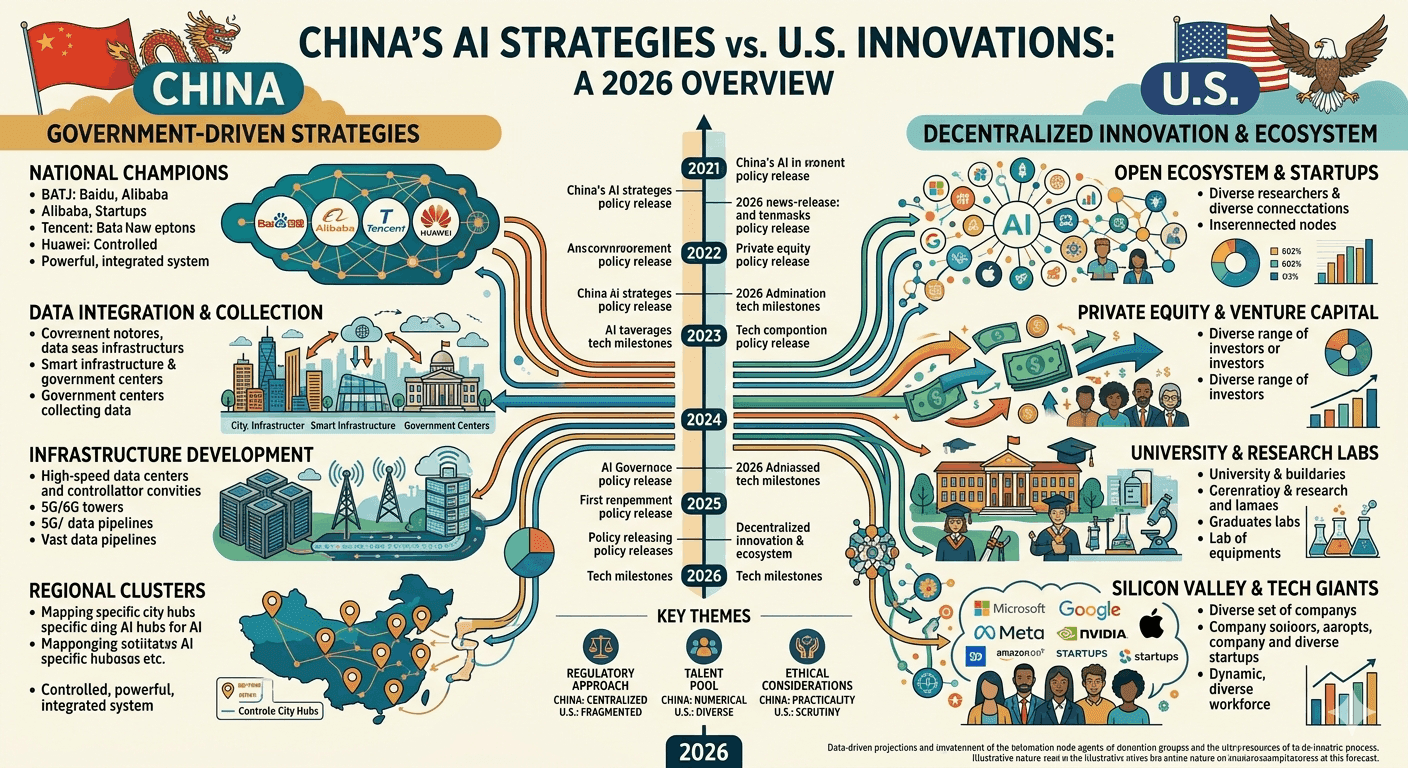
Over the past year, both nations have made significant strides in AI, but their methodologies and focuses have diverged sharply. The U.S. emphasizes innovation and private sector collaboration, exemplified by breakthroughs from companies like OpenAI and Google with their pioneering ChatGPT and Gemini models. In contrast, China showcases state-driven strategies, launching projects such as ERNIE Bot and Zhipu GLM to secure its dominance in the AI ecosystem.
U.S. AI Innovations
The U.S. has nurtured a competitive environment, leading to rapid advancements in AI technologies. The emergence of collaborative tools like ChatGPT and Claude illustrates the national capacity for groundbreaking innovation. U.S. corporations are increasingly prioritizing ethical AI frameworks and responsible practices, although debates over privacy and data security persist, making this a complex issue.
China's State-Driven Strategy
Conversely, the Chinese government actively integrates AI into its broader national agenda. Initiatives like the Made in China 2026 plan specifically aim at advancing technological self-sufficiency, particularly in key AI sectors such as facial recognition and surveillance technologies. Chinese firms are swiftly developing AI systems, often facing less regulatory restraint compared to their American counterparts, which raises significant concerns over human rights and privacy abuses.
Why It Matters
The rivalry over AI extends beyond technological advancements; it plays a crucial role in shaping international relations. This ongoing competition influences everything from trade agreements to military capabilities. The policies adopted by each nation concerning AI reflect their respective ideologies regarding governance, innovation, and global leadership aspirations.
Key Details
Innovation Ecosystems
- United States: The open nature of the U.S. innovation ecosystem inspires creativity and rapid development. The effectiveness of venture capital in supporting startups has created a fertile ground for breakthroughs in generative AI and machine learning.
- China: In contrast, China’s centralized approach allows the government to direct resources towards strategic sectors, facilitating swift project execution. However, this can stifle individual entrepreneurial spirit and limit diversity in innovation.
Regulatory Environments
- U.S.: The U.S. landscape favors self-regulation and evolving industry standards, yet there is a growing demand for comprehensive federal AI legislation. This would ensure safety and ethical use in areas such as data privacy and algorithmic fairness.
- China: Stricter regulations surrounding data use and AI ethics are increasingly dictated by government oversight. This aims to maintain control and cohesion within the digital landscape, often at the expense of personal freedoms.
| Aspect | United States | China |
|---|---|---|
| Innovation Model | Private sector-led | State-directed |
| Data Regulation | Evolving, facing pressure | Strict, centrally controlled |
| Major Players | OpenAI, Google, Anthropic | Baidu, Tencent, Alibaba |
| Focus Areas | Generative AI, OpenAI models | Surveillance, NLP models |
Risks Involved
The current geopolitical tensions have escalated the risk of technological decoupling, with companies potentially limiting cross-border collaborations. The fear of intellectual property theft is a pressing issue, particularly for the U.S., which has accused China of appropriating technology through models like the distillation practices employed by companies to enhance their systems. In a recent court case, Elon Musk's xAI acknowledged using OpenAI’s models to improve its own, igniting a significant discussion about the legitimacy of such practices in competitive AI development.
What to Watch Next
As the AI landscape continues to evolve, several key developments warrant close monitoring: ongoing legal disputes over AI ownership, the potential transformation of global supply chains due to AI capabilities, and the emergence of ethical frameworks that might redefine international AI standards and regulations.
Who Should Care
Policymakers, technology leaders, and investors in the AI sector need to closely follow these emerging trends. The outcomes of this rivalry will significantly impact global market dynamics, innovation trajectories, and regulatory frameworks governing AI technology.
Conclusion
The AI landscape in 2026 is profoundly influenced by the contrasting strategies of China and the U.S. Recognizing these dynamics will be crucial for navigating the future of technology and understanding its implications on a global scale.


