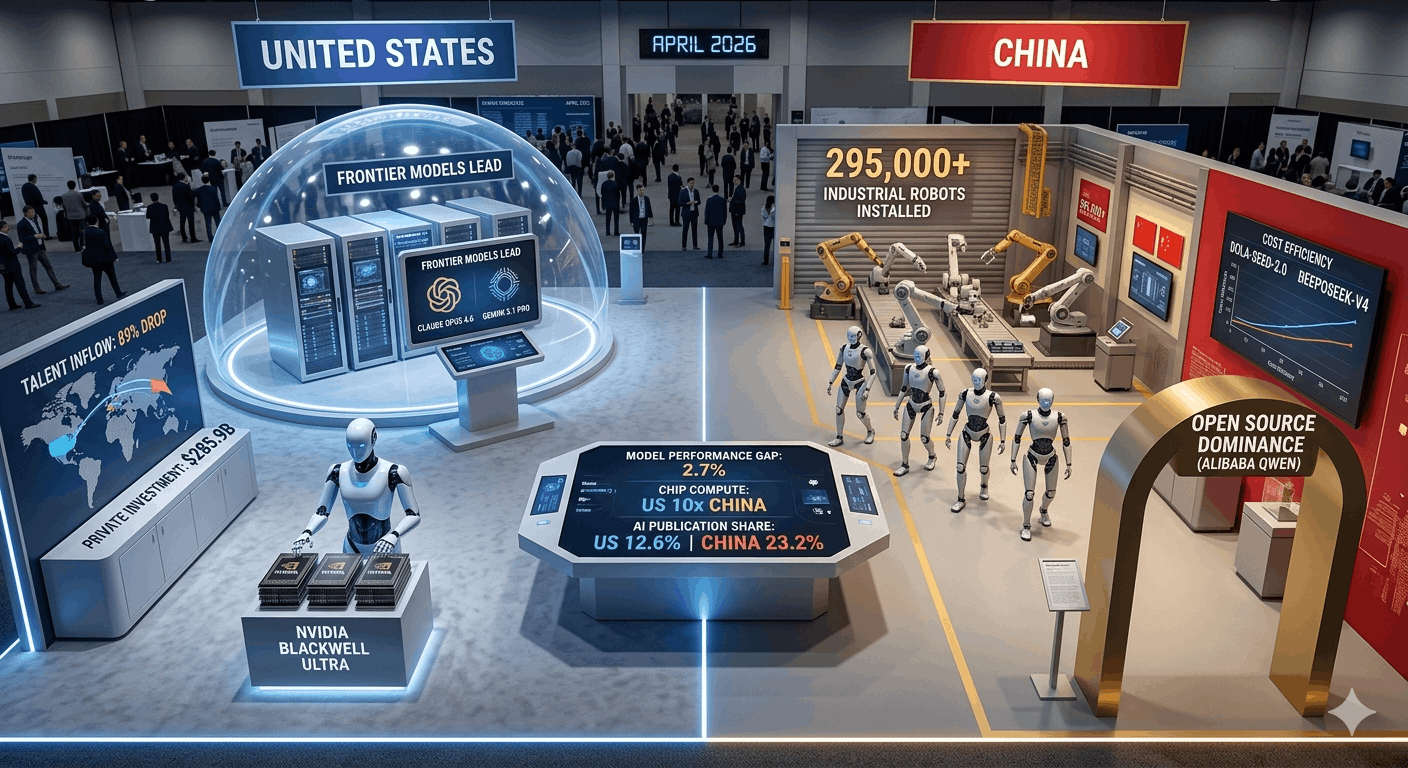
The AI Landscape: US vs. China in 2026
As we step into 2026, the rivalry between the United States and China in the field of artificial intelligence (AI) has become a focal point of global technological development. This intense competition not only defines the pace of innovation and investment strategies but also has far-reaching implications for global policies and market dynamics. In this comprehensive overview, we will examine significant elements of the AI landscape in both countries, highlighting their unique approaches and emerging trends.
Who Should Use This
This article is designed for a wide audience, including technology enthusiasts, policymakers, business leaders, researchers, and anyone with a vested interest in understanding the rapidly evolving dynamics of AI between the United States and China. Whether you’re a student, a business consultant, or a tech developer, this analysis will provide valuable insights.
Comparison of AI Policies
United States
The United States’ approach to AI is heavily influenced by its commitment to innovation, consumer privacy, and ethical AI deployment. Here are the key aspects of the US AI policy:
- Innovation-Driven Framework: The majority of AI growth in the US is propelled by the private sector, with giants like OpenAI, Google, and Microsoft at the forefront of AI research and application.
- Navigating Regulation and Innovation: Recent regulatory measures aim to strike a balance between consumer privacy and fostering innovation. The governance landscape is, however, still in a state of evolution, reflecting the challenges of keeping pace with technological advancement.
- Public-Private Collaborations: The US benefits from numerous partnerships between government entities and private technology firms, facilitating a collaborative environment that supports innovation and ethical considerations in AI.
China
China’s AI strategy contrasts sharply with that of the US, emphasizing state-led initiatives and significant investments in infrastructure. Key elements include:
- State-Controlled Direction: The Chinese government has a proactive role in directing AI research, ensuring that national strategies align with technological advancements. This approach allows for rapid execution of large-scale AI projects.
- Leveraging Vast Data Resources: With comparatively fewer restrictions on data privacy, China harnesses immense amounts of data to fuel rapid progress in machine learning and AI technologies.
- AI for Societal Good: AI applications in China extend to various sectors, including surveillance, healthcare, and urban management, illustrating a unique integration of technology within governance protocols.
| Feature | United States | China |
|---|---|---|
| AI Development | Innovation-driven, private sector focus | State-led initiatives and planning |
| Data Privacy | Strong consumer privacy regulations | Fewer restrictions |
| Hardware | Home to leading chip manufacturers | Increasing investment for self-sufficiency |
| Applications | Focus on ethical AI applications | Broad use in surveillance and governance |
Technological Innovations
Hardware Development
The evolution of AI is not solely reliant on software; significant advancements in hardware play a crucial role:
- Innovations from the US: Companies like NVIDIA and AMD are pioneering the development of high-performance chips tailored for AI applications, supported by robust cloud infrastructures that cater to extensive computational demands.
- China's Hardware Ambitions: China is aggressively working towards self-sufficiency in semiconductor production, with strategic investments in firms such as Huawei and ChangXin Semiconductor, marking a significant shift in its technological landscape.
Practical Use Cases
1. For Students
Students can harness AI tools such as ChatGPT and Google Gemini to enhance their learning experiences. Whether they are researching complex topics, composing essays, or practicing coding, these tools can significantly improve efficiency and support personalized learning.
2. For Business Productivity
AI tools are revolutionizing workplace efficiency through automation and advanced analytical capabilities. Solutions like Microsoft Copilot help professionals streamline their workflows, generate reports, and automate mundane tasks, ultimately leading to increased productivity and focus on creative problem-solving.
3. In Daily Life
In day-to-day scenarios, AI applications from entities like Anthropic and OpenAI are becoming seamlessly integrated into everyday technology. From virtual assistants that manage schedules to recommendation systems that curate content, AI is transforming interactions into more personalized and user-friendly experiences.
Actionable Checklist
To make the most of AI developments and tools in 2026, consider the following checklist:
- Explore and test recent AI tools from leading companies to understand their functionalities.
- Assess how AI can enhance productivity in your work or academic environment.
- Stay informed on the evolving regulations and standards governing AI in both the US and China.
- Engage with tech communities to discuss and share insights on the latest trends in AI technologies.
Conclusion
As the AI race escalates, comprehending the strategic distinctions between the US and China is essential for stakeholders across various domains. The technological innovations birthed from these powerhouses will not only influence the dynamics of domestic policies but will also shape global ethics, economies, and governance frameworks. For continuous updates on this evolving narrative, you can refer to reliable sources like The Verge. With the stakes higher than ever, the developments in this rivalry are paramount to your understanding of the future landscape of artificial intelligence.


