Introduction
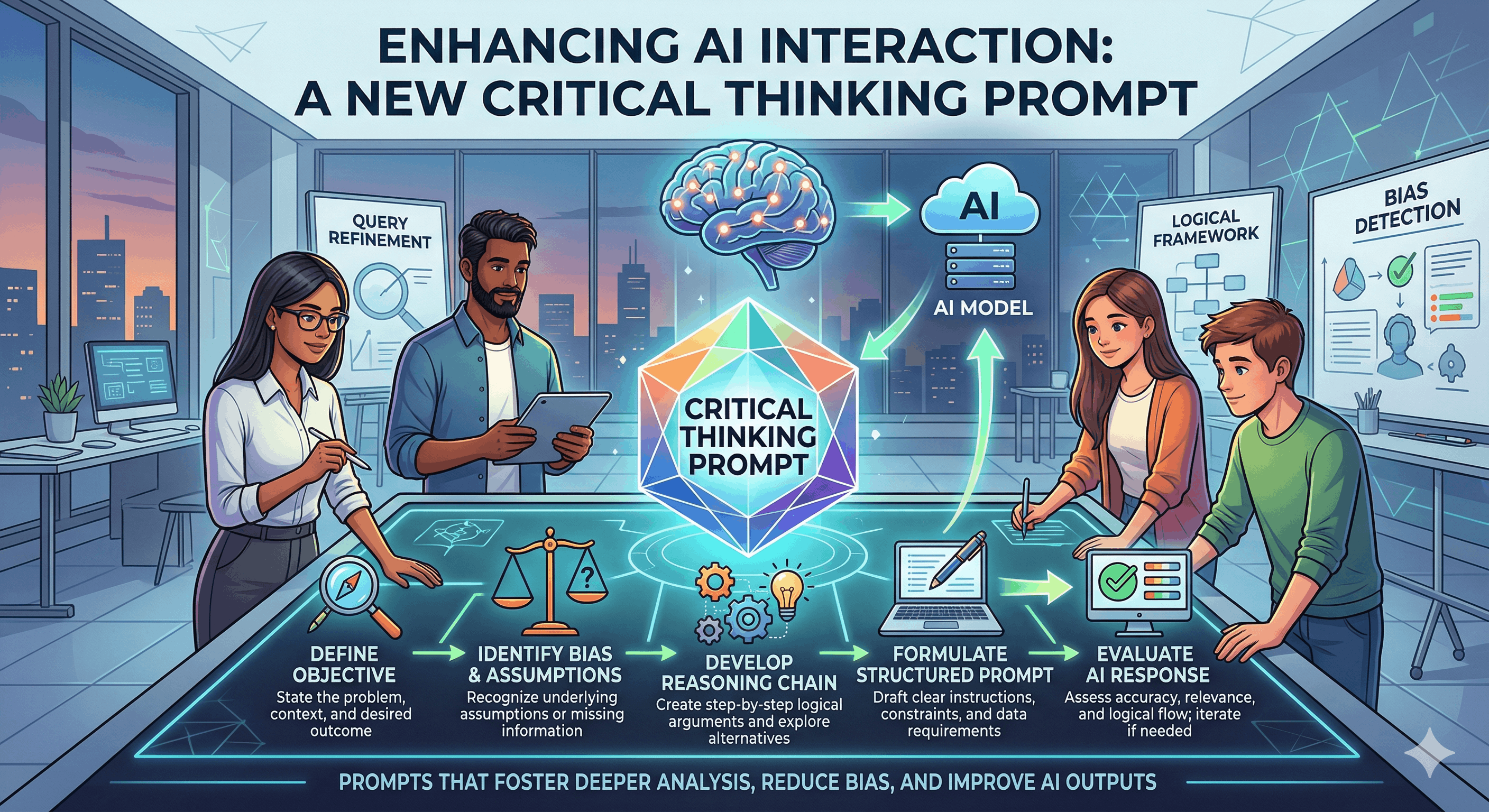
In a world where AI tools like ChatGPT and Google Gemini have become integral to our daily routines, many users encounter a significant limitation: these tools often deliver agreeable responses rather than challenging insights. This creates a unique challenge—how can we make AI more useful in complex decision-making? A recently popularized critical thinking prompt offers an innovative solution.
Who Should Use This
This approach is beneficial for a wide audience:
- Business Professionals: If you're in management, strategic positions, or entrepreneurship, sharpening your decision-making tools can lead to increased efficiency and productivity.
- Students: Whether you're in high school or university, using AI for academic engagement can enhance your learning experiences and develop critical skills.
- Everyday Users: If you're seeking to optimize the potential of AI in daily tasks, everyone can leverage this prompt to make better-informed choices.
Practical Use Cases
Students
For students, the critical thinking prompt can transform routine question-and-answer sessions with AI into enriching educational experiences. This strategy encourages deeper exploration of subjects, aids in honing argumentation skills, and supports research endeavors by challenging assumptions. For instance, if a student asks AI about climate change, instead of just getting information, they can prompt further inquiries that ignite debates about the effectiveness of proposed solutions.
Business Productivity
In the corporate world, adopting AI with a critical lens can significantly streamline processes. Corporate leaders who leverage this prompt can:
- Identify flaws in their current strategies.
- Uncover blind spots in business plans.
- Promote innovative thinking among team members. By engaging AI in this manner, organizations transform it from a mere assistant into a powerful collaborator that offers fresh perspectives and solutions.
Daily Life
For personal applications, engaging AI in critical thinking fosters better decision-making in various tasks—from budgeting to vacation planning. Users can explore different viewpoints, evaluate choices, and ultimately make more informed resolutions. For example, if pondering a major purchase, users can probe AI for potential downsides or alternative investments, leading to a more balanced decision.
How the Prompt Works
The essence of this critical thinking prompt is simple yet effective. Rather than seeking validation or agreement from AI, you frame questions that demand scrutiny and alternative perspectives. Here’s a step-by-step breakdown for using the prompt effectively:
- Make an Initial Statement: Start with your underlying assumption or idea you want to explore. This sets the foundation for the AI’s critique.
- Introduce Challenging Questions: Ask the AI to critique your statement or present conflicting views. Phrasing may include, "What are the weaknesses in my argument?" or "What assumptions am I making?"
- Encourage Further Inquiry: Prompt the AI to dig deeper; ask for evidence, examples, or statistics that support its critiques. For instance, you could say, "Can you provide a case study that contradicts my viewpoint?" This strategy not only makes the conversation more engaging but also leads to richer insights.
Checklist for Effective Use
To ensure that you are leveraging the critical thinking prompt effectively, consider the following actionable checklist:
- Frame Your Assumptions Clearly: Write out your beliefs or strategies before engaging the AI.
- Ask for Counterarguments: Make it a point to request AI's perspective on opposing viewpoints.
- Request Evidence: Don’t hesitate to ask for data, examples, or case studies that can back up critiques.
- Iterate on Your Ideas: Use the feedback from AI to refine your assumptions and solutions continuously.
Benefits of Using a Critical Thinking Prompt
Engaging AI in this manner can significantly enhance your decision-making process for several reasons:
- Diverse Perspectives: The prompt encourages looking at issues from various angles, which aids in understanding complex topics.
- Improved Problem-Solving Skills: Constantly challenging your assumptions fosters a mindset of analytical thinking.
- Greater Creativity: By prompting AI to think outside traditional norms, you may discover innovative solutions that would have otherwise remained hidden.
- More Productive Discussions: Whether you’re working in a team or solo, using AI to stimulate critical debates leads to more fruitful dialogues.
Summary
Incorporating this critical thinking prompt into your interactions with AI can profoundly impact the quality of responses you receive. Whether for academic pursuits, business decision-making, or personal projects, this technique encourages a more dynamic and constructive dialogue with AI tools. By fostering critical engagement, you not only enhance the utility of AI but also improve your own critical thinking skills and decision-making capabilities.
To delve deeper into these techniques and explore more practical methodologies, check out the full article on Tom's Guide.


