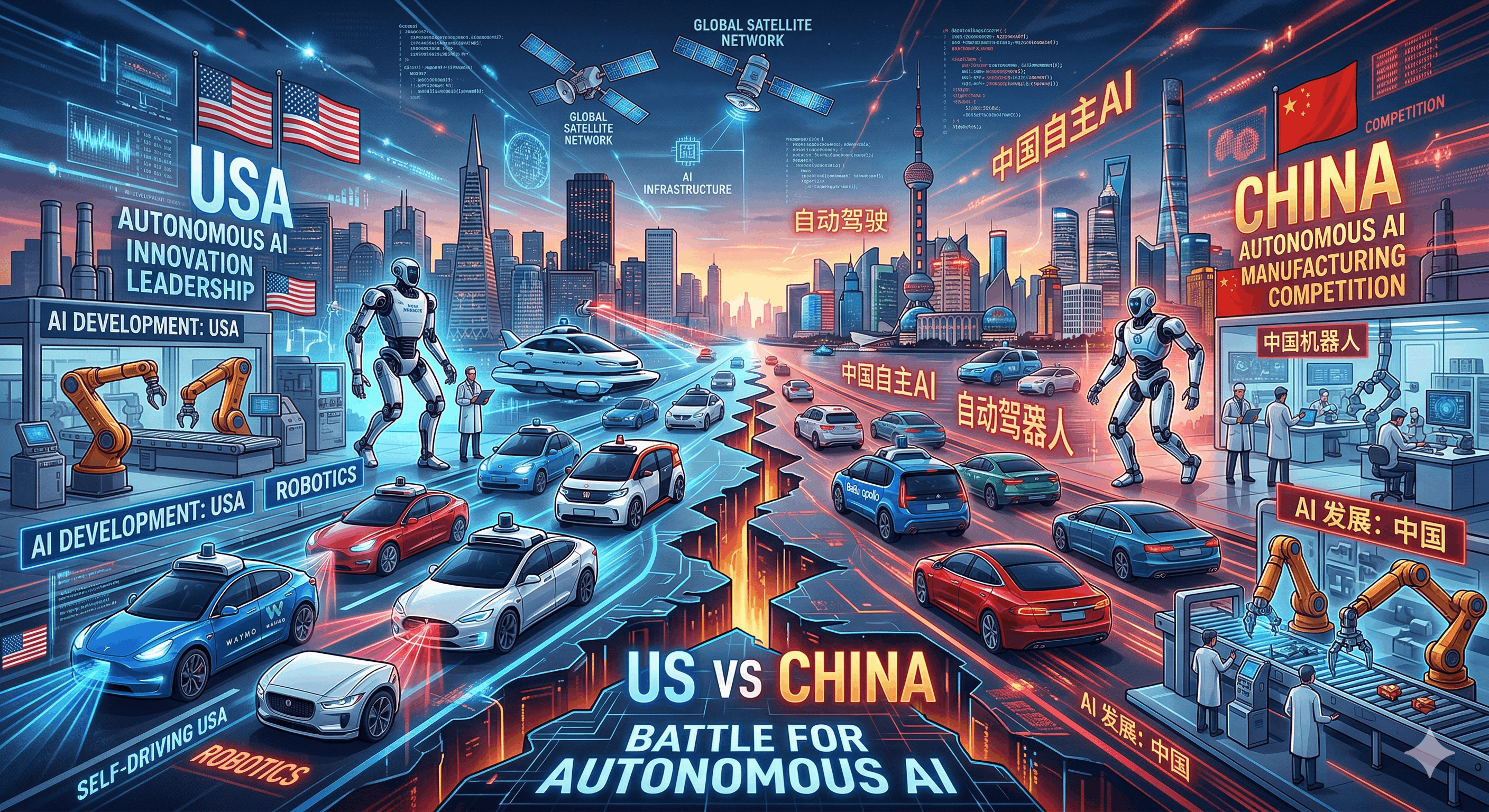
The Battle for Autonomous AI: US vs China in Robotics and Self-Driving
The competition between the United States and China in the realm of Artificial Intelligence (AI) has reached a critical juncture. As autonomous technologies extend beyond chatbots into physical applications such as robotics and self-driving vehicles, the stakes have never been higher. In this piece, we’ll explore how each nation’s AI landscape, technological advancements, and policy frameworks shape this ongoing rivalry.
Who Should Use This
This article is particularly beneficial for:
- Tech Enthusiasts: Professionals looking to understand the implications of advancements in AI and autonomous technologies.
- Investors: Individuals or firms looking to capitalize on emerging technologies in the AI space.
- Students and Educators: Anyone aiming to keep abreast of revolutionary changes in technology and their socio-economic impacts, particularly in AI.
- Policymakers: Those interested in regulatory impacts and the geopolitical implications of AI development.
Current Landscape of Autonomous AI
US AI Landscape
In the United States, companies such as Tesla lead the charge towards full self-driving capabilities. Tesla has made significant advancements in pushing the boundaries of autonomous driving technology by continually updating and enhancing AI-driven features in their vehicles. Their Full Self-Driving (FSD) package has become a benchmark against which competitors measure performance.
Despite this impressive progress, the US faces numerous challenges. Regulation and safety concerns are critical roadblocks that slow down innovation. The US government is beginning to introduce legislative measures aimed at guiding the responsible development of AI technologies. However, the pace remains reactive rather than proactive, potentially hindering the competitive edge the US seeks in this global race.
Chinese AI Landscape
Conversely, China is swiftly transforming its cities into extensive testing grounds for autonomous technologies. Companies like Baidu and BYD are rapidly deploying extensive robotaxi fleets across urban centers like Beijing. The Chinese government's proactive stance, characterized by favorable regulations and significant investments, effectively positions the country as a formidable leader in the physical deployment of AI technologies.
The stark contrast in approaches raises questions about the long-term viability of the US strategy against the robust Chinese model, which continues to gain momentum.
Comparative Analysis of Key Technologies
| Feature/Category | US (Tesla, Waymo) | China (Baidu, BYD) |
|---|---|---|
| Autonomous Driving Level | Level 3-4, cautious rollout | Level 4, widespread deployment |
| Government Support | Increasing, but reactive | Robust, proactive |
| Urban Testing Grounds | Limited to select cities | Expanding rapidly across multiple cities |
| Safety Regulations | Stringent, often slowing progress | More permissive, allowing faster deployment |
Implications of the US-China Rivalry
The US-China rivalry in AI extends beyond sheer competition to raise critical questions about data privacy, ethical AI use, and international standards. The outcomes of this race will not only influence global trade but also reshape technological standards and the balance of power on an international scale.
Economic Impacts
Both nations' substantial investments in AI are likely to shape their economic futures. Enhanced autonomous driving technologies could lower traffic costs and increase productivity leading to exponential growth opportunities. However, the flip side includes significant job displacements in driving professions and related sectors, raising social and economic challenges that both nations will need to address.
Practical Use Cases
For Students
Students can leverage insights from the autonomous landscape to forge career paths in AI, robotics, or automotive engineering. Being informed about the evolving technological landscape equips them to navigate future job markets effectively.
Business Productivity
- Smart Logistics: Companies can collaborate with firms like Baidu or Tesla to deploy autonomous vehicles, enhancing supply chain efficiency and reducing overhead costs.
- Customer Engagement: Employing robotic technologies for customer service and support presents an avenue for businesses to enhance responsiveness and customer engagement.
Daily Life
- Convenience: Autonomous taxi services can streamline daily commuting. Services like Baidu’s robotaxi provide users with opportunities to experience lower transportation costs and improved mobility options.
- Safety Enhancements: With the aim of reducing accidents caused by human error, autonomous vehicles provide peace of mind for passengers, promoting a safer travel environment.
Actionable Checklist
- Follow the latest developments in US and Chinese autonomous technologies by subscribing to industry newsletters.
- Explore and understand local regulations regarding the use of autonomous vehicles in your area.
- Consider learning AI programming languages and relevant skills for a lucrative career in autonomous technology.
- Stay updated on safety protocols from manufacturers and government agencies regarding autonomous vehicles.
- Test out innovative mobile services from leading autonomous tech firms in your local area.
Conclusion
The race for supremacy in autonomous AI is intensifying, with the US and China exerting significant influence in the landscape of transformative technologies. Understanding these trends can provide valuable insights into broader economic and social implications that will shape our future. To deepen your understanding of the topic, visit the original source here.


