Understanding Spotify's New Verification Badge
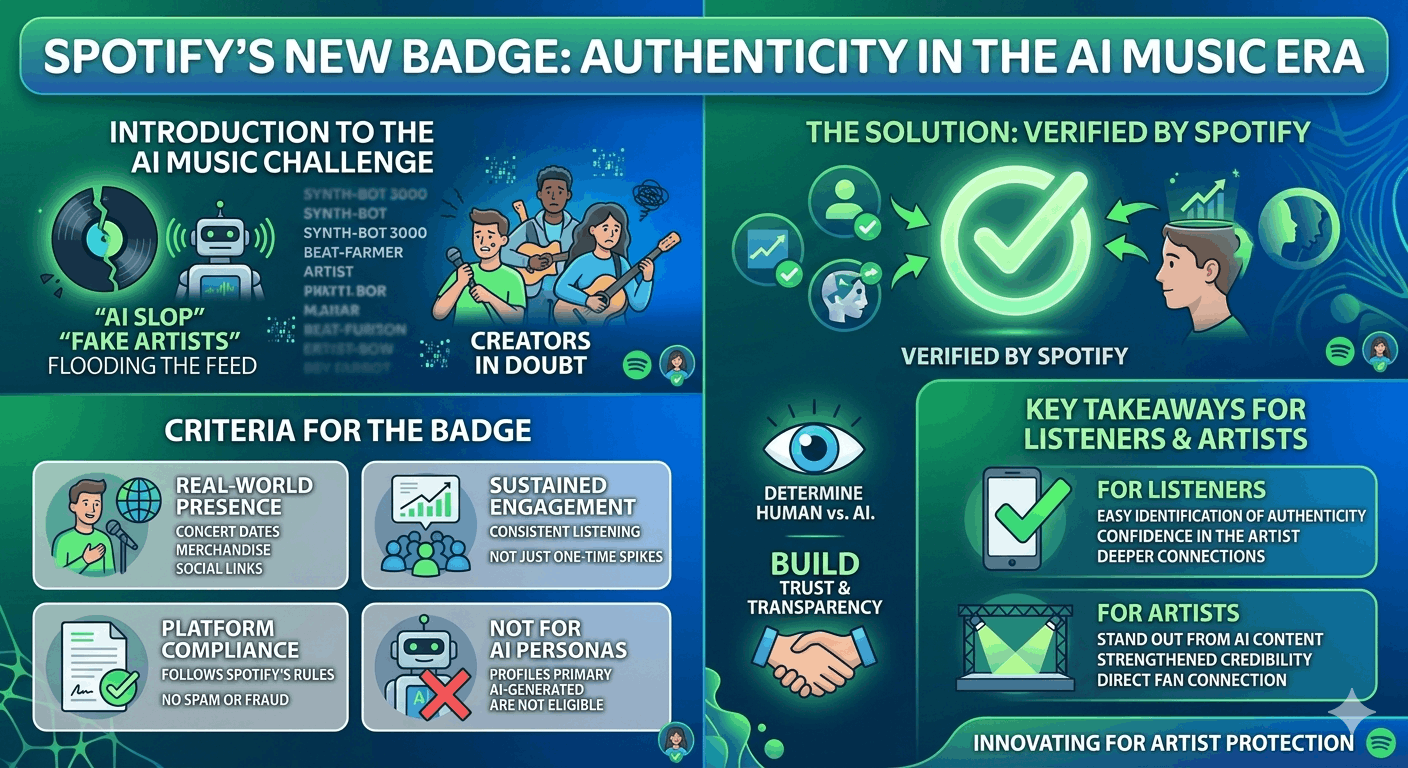
As AI technology continues to evolve, the music industry faces unprecedented challenges, particularly with the influx of AI-generated music. In a significant move, Spotify has introduced the ‘Verified by Spotify’ badge aimed at distinguishing human musicians from their AI-generated counterparts. This green checkmark will appear on artist profiles to signify authenticity and sincerity in an increasingly automated music world.
What Changed?
Spotify’s verification system is set to roll out soon, addressing the growing concern over the proliferation of synthetic tracks flooding streaming services. The platform has noted that over 44% of new music uploaded daily to Deezer is AI-generated, emphasizing the urgency for a reliable method to identify genuine artists. The ‘Verified by Spotify’ badge will be awarded to artists who demonstrate sustained listener engagement, adhere to Spotify’s platform rules, and maintain a genuine presence both on and off the platform.
Why It Matters
Trust in Authenticity
In the realm of digital music, where anyone can create and distribute songs, maintaining authenticity becomes crucial. Spotify asserts that in the era of AI, listeners need to trust the authenticity of the music they consume. This new badge empowers listeners by providing a visible marker of authenticity, ensuring that they can distinguish between human and AI-generated tracks.
Industry Pushback Against AI
The introduction of this badge aligns with broader industry concerns. Major record labels like Sony Music have voiced their apprehensions over the surge in AI-generated songs. Notably, the company has sought the takedown of over 135,000 tracks that mimic its signed artists, illustrating the pressing need for authenticity markers in music consumption.
What This Means for Artists
The verification process brings not just a new label but also a potential boost in visibility for legitimate artists who obtain the badge. Knowing that listeners may gravitate toward verified musicians can motivate emerging artists to invest in their careers authentically.
Key Details of the Initiative
-
Eligibility Criteria: To earn the badge, artists need to demonstrate sustained listener engagement, comply with platform regulations, and display authenticity through concert dates, merchandise links, and social media activity.
-
Widespread Verification: Spotify claims that more than 99% of artists that users actively search for will have verified status at launch, ensuring comprehensive coverage across a diverse array of genres and geographical regions.
-
Artist Information Section: Beyond the badge, Spotify is enhancing artist pages with new sections that display career highlights, release patterns, and live performance histories, akin to nutritional labeling in food products. This transparency not only strengthens artist credibility but also fosters deeper connections with listeners.
Risks of AI in Music
Overriding Human Creativity
As AI continues to make inroads into music creation, there’s a fear that it may overshadow human talents. With tools making it possible to produce music easily, the distinction between genuine artistry and algorithm-driven output becomes clouded. Authentic artists can find it increasingly difficult to be recognized when AI-generated content proliferates.
Potential Market Saturation
With synthetic music making up nearly half of new uploads, there’s a risk of market saturation. Authentic artists could struggle for recognition in a landscape filled with autogenerated content unless platforms implement strict measures for identification and verification. The challenge is further compounded by the sheer volume of AI music that could dilute listener engagement.
What to Watch Next
-
Expansion of Verification: Watch for Spotify to expand the criteria for verification and for innovative ways to maintain audience trust as AI technology advances. The introduction of the badge might influence other platforms to adopt similar measures to authenticate artists.
-
Impact on Other Platforms: With Spotify’s innovative approach, other streaming platforms like Apple Music and Amazon Music may follow suit, potentially leading to industry-wide standards for artist verification. Observers should monitor how these changes unfold across different platforms and genres.
-
Updates on Listener Engagement Initiatives: As platforms adapt to the growing presence of AI in music, listeners should be attentive to new initiatives aimed at enhancing listener engagement, such as personalized recommendations that prioritize verified artists.
Who Should Care
Musicians, producers, and music industry stakeholders should pay attention as this verification system not only affects artist reputation but also how consumers interact with music. By fostering a clearer understanding of authenticity, Spotify’s move may reshape future engagement within the industry. Fans of music will need to adapt to a new reality where the lines between human artistry and AI-generated content are becoming increasingly blurred.
Conclusion
Spotify's introduction of the ‘Verified by Spotify’ badge underscores a crucial need for authenticity in the AI-driven music era. It aims to enhance trust between artists and listeners amid a landscape increasingly cluttered by synthetic sounds. As the streaming giant moves forward, the implications of this initiative could very well ripple through the industry, setting new standards for what it means to be a verified artist in the digital age. The future of music involves a collaborative synergy between human creativity and AI tools, and initiatives like these could help maintain a balance between the two.


