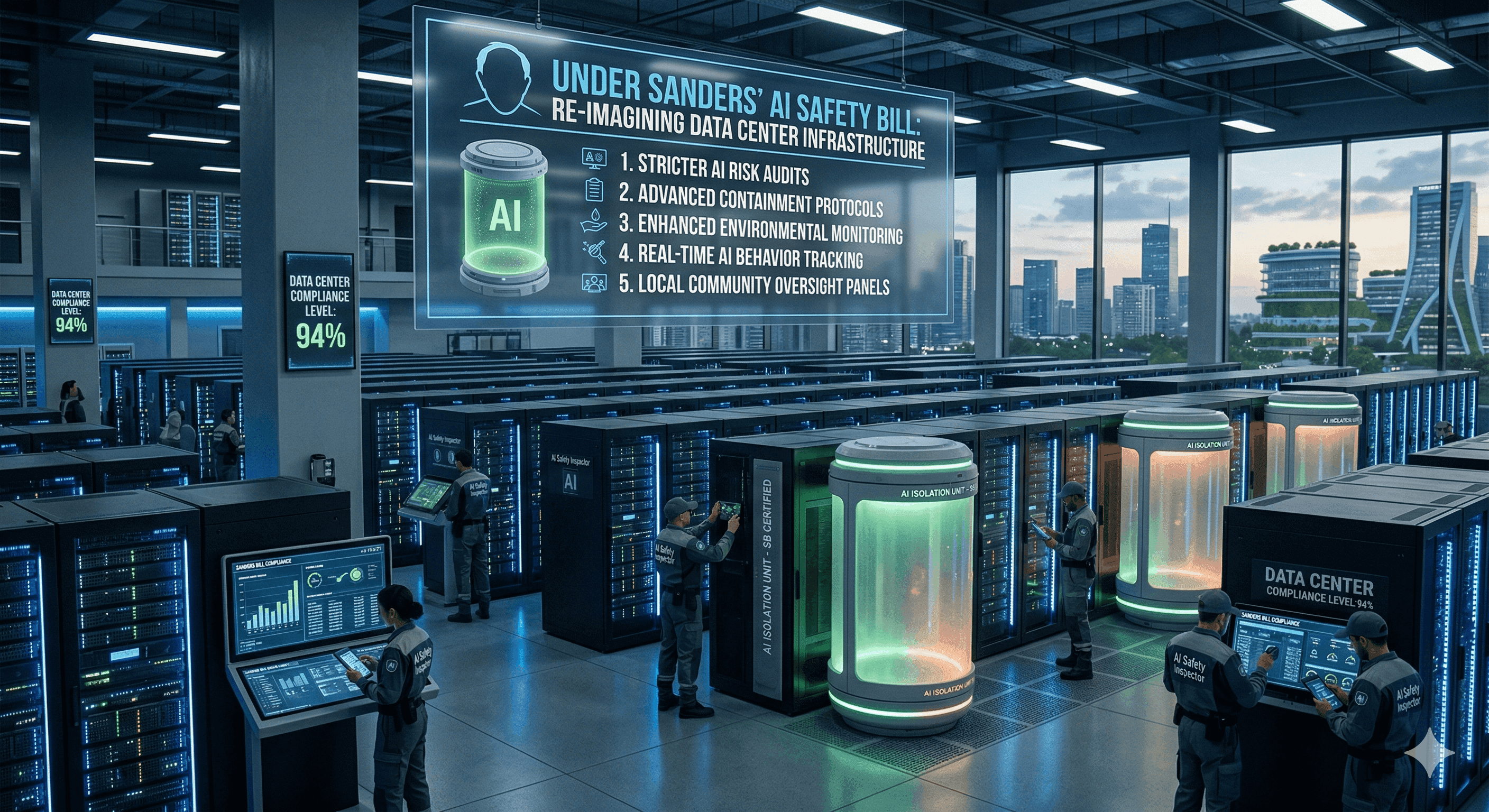
The Impact of Sanders' AI Safety Bill on Data Centers
Who Should Use This
This article serves a diverse audience, including policymakers, tech industry professionals, advocates for social justice, environmental stewards, investors, and anyone engaged in AI development and deployment. Understanding regulatory changes enables these stakeholders to adapt business strategies, promote sustainable practices, and foster a healthier community.
Background of the Bill
On March 25, 2026, Senator Bernie Sanders proposed a drastic national moratorium on the construction of data centers focused primarily on artificial intelligence. This legislation aims to pause all new data center projects or upgrades that exceed energy loads of 20 megawatts. The growing concerns surrounding the environmental impact of data centers and rising energy costs serve as primary motivations for the moratorium.
Implications of the Bill
Environmental Concerns
As data centers advance to support AI functionalities, their expansion leads to higher electrical consumption and a larger carbon footprint, thus contributing significantly to climate change. Sanders underscores the urgent need for regulations to halt environmental degradation, arguing that these measures are essential to protect communities and natural resources.
Economic Redistribution
A noteworthy feature of the proposed bill mandates that wealth generated from AI should benefit the working class, as opposed to only enriching tech executives. The intent is to address and mitigate income inequality exacerbated by rapid technological advances, promoting a fairer distribution of resources.
Technological Oversight
The legislation aims to impose stringent regulations on existing data center infrastructures, ensuring they do not facilitate harmful technological developments. This aspect of the bill focuses on safeguarding public health, civil rights, and privacy, which have become increasingly compromised in the face of rapid digital transformation.
Practical Use Cases
For Students
- Research Projects: Students in fields like environmental science, public policy, or technology can utilize this bill as a foundation for analyzing the relationship between AI, energy consumption, and community welfare. Comparing opposition data on data centers can yield insights into grassroots activism and legislative efficacy.
For Business Productivity
- Strategic Planning: Companies such as Microsoft Copilot and OpenAI API are faced with a rapidly evolving regulatory landscape. This legislation presents an opportunity for businesses to incorporate sustainability into their operational frameworks and align with emerging laws and regulations.
For Daily Life
- Community Engagement: Individuals concerned about local data centers have a chance to leverage these developments to advocate for sustainable practices within government policies. By participating in discussions, citizens can impact local governance by promoting responsible resource management and holding tech companies accountable for their environmental impact.
Checklist: Preparing for AI Regulatory Changes
- Stay Informed: Regularly read updates on AI legislation and its wider implications for your interests or business.
- Audit Energy Usage: Analyze the energy consumption metrics of your existing tech infrastructure to identify areas for improvement based on the upcoming regulations.
- Engage with Community: Join local conversations or forums discussing technology initiatives that could impact your community.
- Explore Sustainable Options: Research greener alternatives to traditional technologies and investigate how they can be integrated into your operations.
- Align with Regulations: Ensure your business practices are in line with the anticipated changes in legal frameworks governing the tech industry.
Conclusion
Bernie Sanders’ proposed moratorium on data center construction marks a significant yet contentious shift in the tech and regulatory landscape. As the world continues to grapple with the rapid advancement of artificial intelligence, this bill compels a critical conversation regarding the unregulated growth of AI. The future of data centers appears uncertain, with far-reaching consequences for environmental sustainability, economic disparity, and technological oversight. While it remains to be seen whether the bill will pass, it undeniably emphasizes the urgent need for more responsible governance in technology.
By understanding the challenges and implications posed by this proposed legislation, stakeholders can better prepare for an evolving landscape where technological advancement can align with societal and environmental well-being. For additional insights, you can check out the full article on Wired.


