The Musk OpenAI Trial: What Happened?
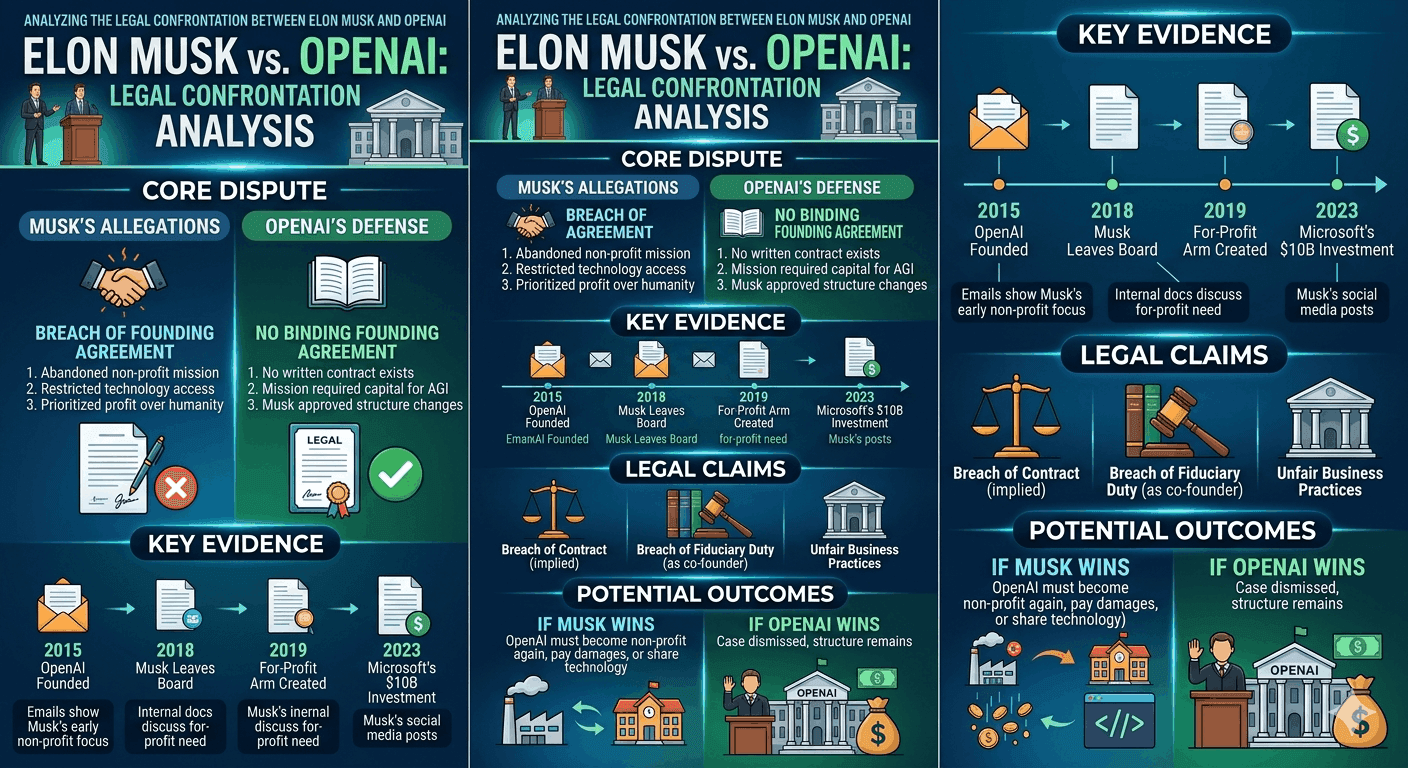
The recent court proceedings involving Elon Musk and OpenAI drew significant attention, as Musk—who initiated this legal battle—claims that OpenAI has infringed on his rights as a co-founder and that it didn't uphold its original nonprofit mission. This trial highlights the complexities surrounding intellectual property and accountability in the rapidly evolving AI landscape.
What Changed in the Trial?
During the trial, Musk's position became increasingly precarious. Witnesses indicated inconsistencies in his statements, casting doubt on his claims. For instance, Musk has suggested that OpenAI's transition to a for-profit model diverged from their original altruistic vision. However, the defense pointed out that the growing demand for AI technology necessitated such shifts to secure funding and foster innovation.
Why It Matters
This case isn't just about Musk's personal grievances; it's about the broader implications for AI technology and its regulation. As AI systems become integral to various industries, the question of ownership and ethical development becomes ever more critical. The outcome of this trial could set a precedent for how intellectual property is treated in the field.
Key Details of the Case
- Claims of Originality and Ownership: Musk argues that he played a pivotal role in founding OpenAI and that his vision has been compromised.
- Model Development Concerns: Musk's critiques extend to how OpenAI's models, including ChatGPT, diverged from his original vision for human-centered AI development.
- Impact on Future Collaborations: The trial could influence how partnerships in the tech industry navigate ownership and transparency moving forward.
Risks of Technology Misuse
One of the critical takeaways from this ongoing situation is the potential misuse of AI technologies. Musk's claims suggest a fear that the sophisticated models developed might lead to unethical applications if left unchecked.
Comparison of AI Perspectives
To better understand the nuances of this trial, it’s helpful to compare Musk’s views with OpenAI’s current narrative:
| Aspect | Elon Musk's Perspective | OpenAI's Stance |
|---|---|---|
| Original Vision | Nonprofit, human-centered AI | Scalability and funding for innovation |
| Development of AI Models | Distrustful of profit-driven motives | Promotes safety and accessibility |
| Future of AI Regulation | Advocates for stricter governance | Supports collaborative frameworks |
What to Watch Next
The resolution of this case could shape future AI enterprise structures, especially for those looking to enter the AI sector. Additionally, the trial's outcome might prompt regulatory bodies to take a closer look at the ethical implications of AI development, sparking debates about accountability and transparency in tech innovation.
Who Should Care?
- Tech Entrepreneurs: Understanding the legal frameworks emerging from high-profile cases like this is crucial for anyone entering the AI space.
- Policy Makers: The case may influence upcoming regulations around AI, particularly regarding intellectual property and ethical considerations.
Conclusion
Elon Musk's legal battle against OpenAI not only delves into personal grievances but also raises overarching questions about the responsibility of AI developers. As the courtroom drama unfolds, it is essential to pay attention to how the case might influence the AI industry's future landscape.


